
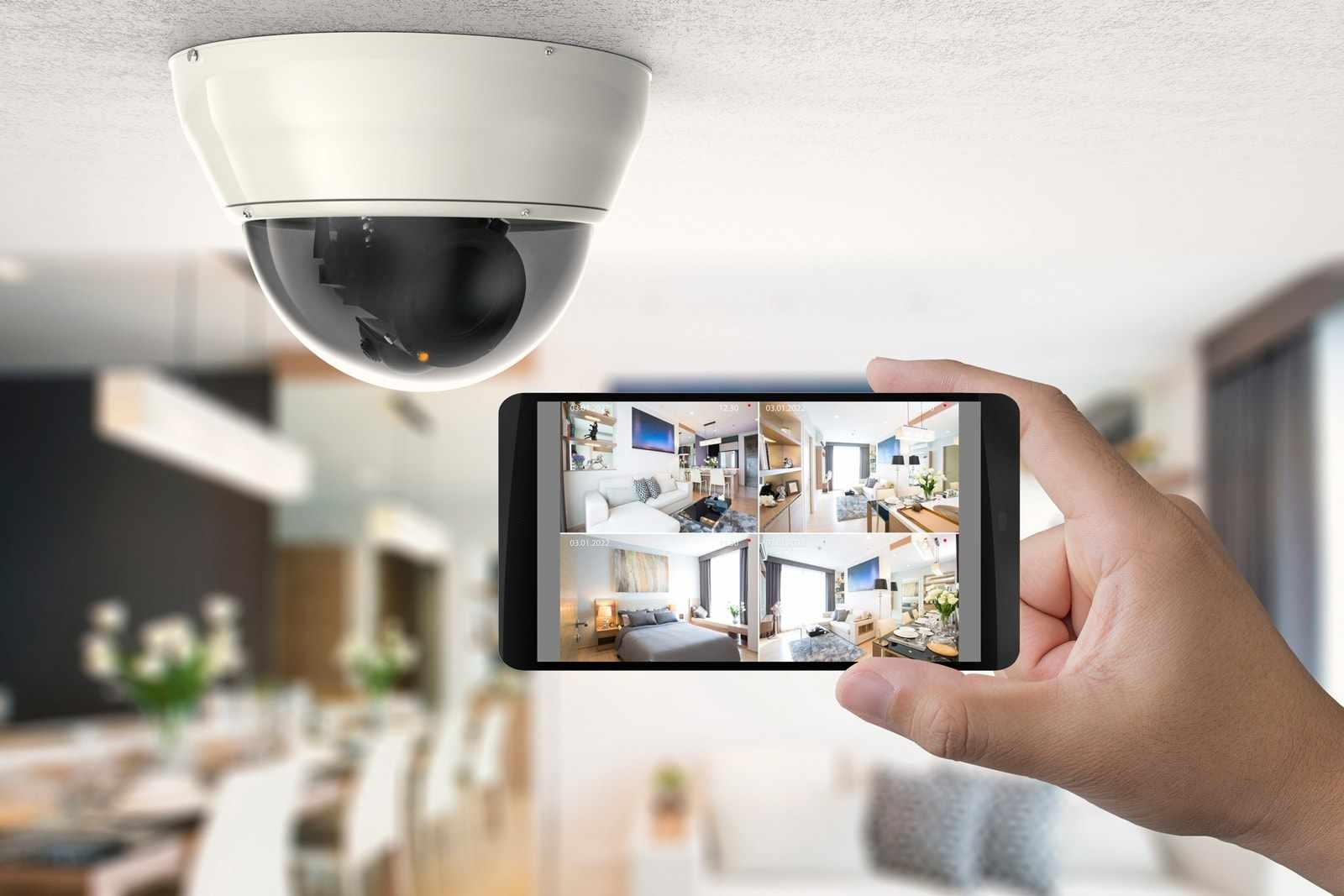
Wireless, Wi-Fi-dependent security cameras stop recording the moment the internet goes down, which is exactly when a home is most vulnerable during a Southwest Florida storm. Executive Electronics builds security camera systems around wired, battery-backed recording precisely because outages and hurricanes are a fact of life in Naples and the surrounding region.
Why one camera out front isn't enough
Cameras are usually the first thing clients ask about, and it's easy to see why: cheap, DIY cameras are everywhere. But Executive Electronics has found that a handful of well-placed, properly integrated cameras tell a far better story than one camera out front and one out back.
"One camera out front and one out back doesn't do the story justice. If I can see where somebody parked and where people moved through, that's the story you actually need."
Dave Minerva, President of Executive Electronics
Integrating cameras directly into the alarm system, rather than running them as a separate app-based product, also cuts down on false alarms and wasted time in situations where every second counts. Most clients end up with cameras covering the front, back, sides, lanai, and entry doors, positioned to capture multiple angles rather than a single static view.
What happens to your cameras when the internet goes down
Coverage is only half the equation. What happens when the internet goes down matters just as much, especially in a region that sees its share of hurricanes and severe storms. Most budget and DIY systems depend entirely on a home's Wi-Fi connection to record and store footage, so when the internet goes out, so does the camera.
Dave's answer is direct: a wired system that broadcasts over the internet, backed by battery power, keeps recording even when Wi-Fi doesn't.
"We had a Comcast outage for six or eight hours, and my cameras were still recording, going to the cloud and to an NVR. I wasn't left with gaps in my day or my week."
Dave Minerva, President of Executive Electronics
That reliability is worth the investment, even if it means spending more upfront on equipment and a proper recorder. According to Dave, the difference between a budget setup and a professional-grade one rarely "moves the decimal" in the overall project cost, but it's the difference between having footage when you need it and not.
"You might spend five grand versus two, but it's going to be there when you need it. You can't pick and choose when an event happens and just hope you have Wi-Fi."
Dave Minerva, President of Executive Electronics
How long is camera footage stored?
There's also the matter of what's inside the camera itself. Executive Electronics sources surveillance products built on secure, vetted chips, avoiding hardware with known vulnerabilities, and builds in enough storage for the job: a minimum of two weeks of recording residentially, and up to two or three months, or continuous recording, for higher-traffic commercial sites.
The goal isn't a live-looking camera that's entirely dependent on a Wi-Fi signal. It's a system that keeps recording through a power outage, an internet outage, or a storm, because that's exactly when you're most likely to need it.
Frequently asked questions
Do security cameras still work during a hurricane or power outage? A properly designed wired camera system with battery backup and an on-site network video recorder (NVR) or cloud upload continues recording even when internet or power is lost, unlike Wi-Fi-only DIY cameras that stop recording the moment the connection drops.
Is a wired security camera system worth the extra cost over wireless? Yes, in most cases. The cost gap between a budget wireless setup and a professional wired system is usually a few thousand dollars, but the wired system keeps working through the outages and storms when footage matters most.
How long is security camera footage stored? Executive Electronics recommends a minimum of two weeks of stored footage for residential systems, with two to three months or continuous recording for higher-traffic commercial properties.
Why integrate cameras with the alarm system instead of running them separately? Integrating cameras into the alarm system reduces false alarms and speeds up verification when an event happens, rather than requiring a separate app and a manual check.