
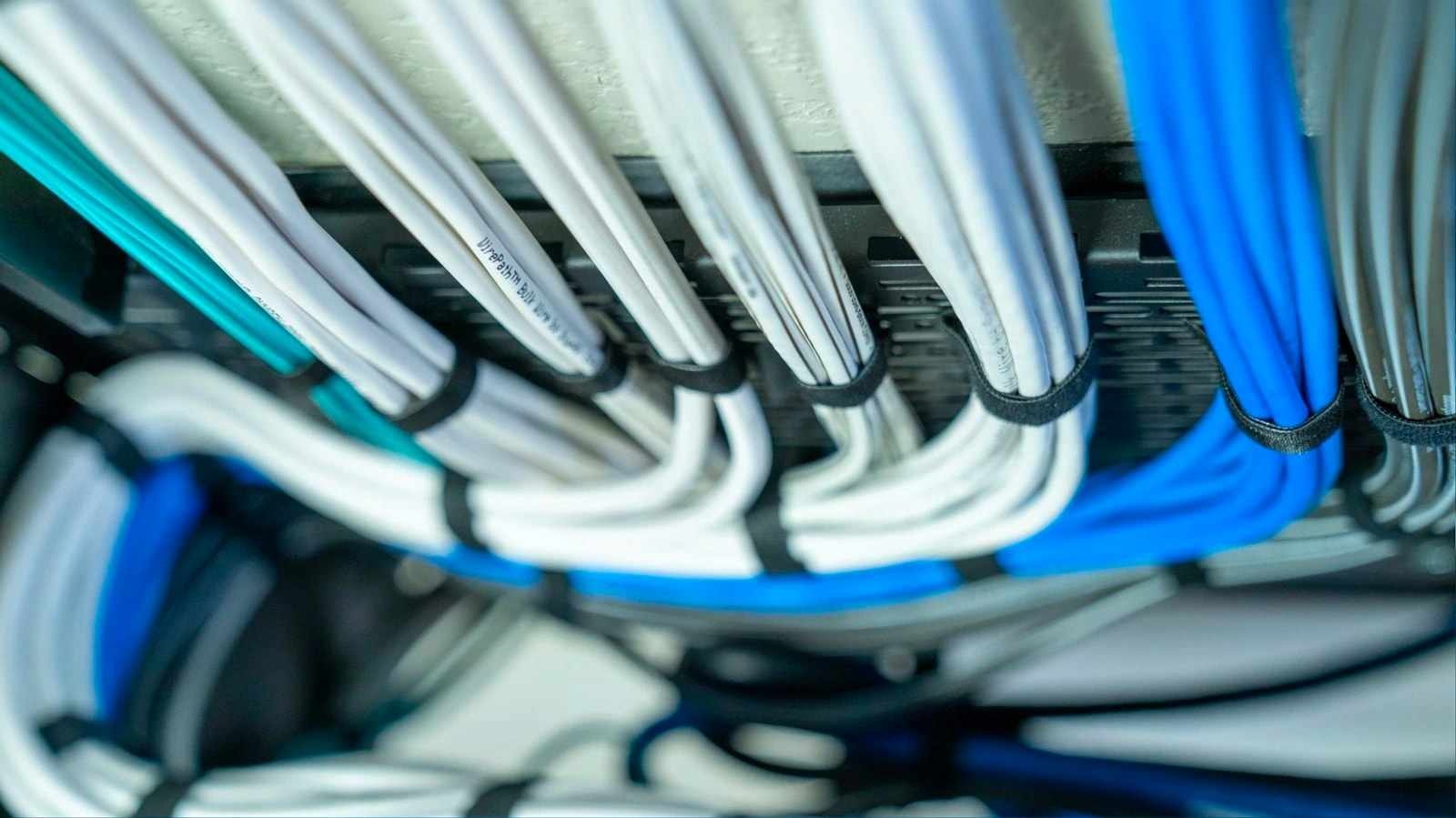
Structured wiring, run during new construction or a major renovation, is the single most important decision behind a reliable smart home, and Cat 6 cable at three times the speed of Cat 5e for roughly a third more in cost is the practical standard for most Southwest Florida homes. Every later system, security, cameras, networking, automation, home theater, depends on infrastructure decided before the drywall goes up.
Why there's only one window to wire a home properly
Every smart home decision, from the security system to the home theater, depends on infrastructure that goes in long before any of it is visible. And there's only a small window to get it right: either when a home is first built, or during a significant renovation.
"Infrastructure wiring is the most important thing you can get done, and you get a small window to do it: either when the home is first built, or during a significant renovation."
Dave Minerva, President of Executive Electronics
Cat5e vs. Cat6 vs. fiber: what to choose
Cat 5e wiring has been the standard for nearly 50 years, but it has real limits with today's Wi-Fi 7 and 5G-era demands. Cat 6 wiring runs three times faster for only about a third more in cost, and for most homes, that's all that's needed.
"Homes with Cat 5e are never going to satisfy Wi-Fi 7 and everything that needs to happen. Cat 6 is three times faster for only about a third more in price."
Dave Minerva, President of Executive Electronics
For most homes, running distances stay under 330 feet, which means Cat 6 alone is enough. Beyond that distance, fiber can carry the signal in and convert to Cat 6 for distribution, giving a home the infrastructure it needs for decades, not years.
"You can have fiber coming into the house and convert to Cat 6 if you're under 330 feet, and have the infrastructure your home needs for the next 30 or 40 years."
Dave Minerva, President of Executive Electronics
On new construction, Executive Electronics works as part of the design team from the start, coordinating with the mechanical, HVAC, electrical, and plumbing contractors so that every camera, sensor, and access point lands in the right place, at the right height, before drywall goes up.
Designing whole-home Wi-Fi that actually covers a large property
Wi-Fi coverage itself has become one of the biggest requests from clients, second only to cameras. A properly designed network, with its own router, modem, and multiple access points, can cover a large property without dead zones, allowing a phone call or a video stream to hand off seamlessly from the primary suite to the kitchen to the dock without dropping.
"A lot of the nicer luxury neighborhoods, like Port Royal, have very poor cell signal. With good coverage through the property Wi-Fi network, you're going to have better phone calls too."
Dave Minerva, President of Executive Electronics
There's a security benefit built into a properly designed network as well. With bank-level encryption and a network managed by Executive Electronics, outside vendors like pool technicians or HVAC contractors can be given controlled access without ever handing over the homeowner's actual credentials.
"The pool guy, the HVAC guy, they come to us to put products on the network without ever getting the homeowner's actual credentials. That gives the client even greater peace of mind."
Dave Minerva, President of Executive Electronics
None of it is visible once the walls are closed up. But it's the foundation everything else in a smart home depends on.
Frequently asked questions
When should I wire my home for smart home technology? The best time is during new construction, before drywall goes up, or during a major renovation when walls are already open. Structured wiring is far more expensive and disruptive to add afterward.
What's the difference between Cat5e and Cat6 wiring? Cat 6 wiring transmits data roughly three times faster than Cat 5e for about a third more in material cost, and it's better equipped to handle current and future Wi-Fi and streaming demands.
Do I need fiber optic cable in my home? Only if a wiring run exceeds about 330 feet. Under that distance, Cat 6 alone provides enough speed and reliability for most homes; beyond it, fiber can carry the signal in and convert to Cat 6 for distribution.
Why does whole-home Wi-Fi need multiple access points? A single router often can't cover a large property without dead zones. Multiple access points allow seamless roaming, so a call or stream doesn't drop as you move from room to room or out to the pool or dock, and it also improves Wi-Fi calling in areas with weak cell signal.